
Understanding Two-Mode Hybrids: How Dual-Mode Technology Revolutionized Hybrid Vehicles
Explore how two-mode hybrid systems combine electric and gasoline power for improved efficiency, performance, and versatility in modern vehicles.
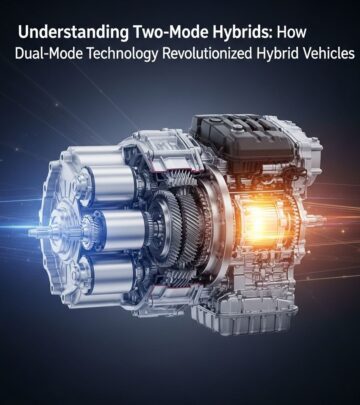
Hybrid technology has significantly advanced over the last two decades, with the two-mode hybrid system standing out as one of the most innovative. Designed for optimum fuel efficiency and power, especially in larger vehicles, two-mode hybrids seamlessly blend electric and gasoline power using sophisticated, multi-regime drivetrains. This article explores the fundamentals of two-mode hybrid systems, their technological underpinnings, historical development, key advantages, and impact on the automotive landscape.
What Is a Two-Mode Hybrid?
A two-mode hybrid is a type of hybrid vehicle system that operates in two distinct modes—each optimized for a different type of driving. Unlike simpler single-mode systems, two-mode hybrids use a complex arrangement of electric motors, an internal combustion engine (ICE), planetary gearsets, and multiple clutches. This allows the vehicle to switch between or combine electric and mechanical power sources to maximize efficiency across changing driving conditions—from city traffic to highway cruising and towing.
- Mode 1: Input-split, or electric/battery-dominant, ideal for low speeds and light-duty driving.
- Mode 2: Compound-split, or engine-dominant, optimized for higher speeds or heavy loads, such as highway driving or towing.
This dual-mode capability enables two-mode hybrids to deliver strong fuel savings without sacrificing power or utility.
How Does a Two-Mode Hybrid Work?
At the heart of a two-mode hybrid drive system is a highly sophisticated transmission that integrates two electric motors and an internal combustion engine using a combination of planetary gearsets and hydraulic clutches. The system is designed to operate in both of the following configurations:
- Series Hybrid (Input-Split) Mode: At low speeds or light loads, the electric motors alone can power the vehicle. The gasoline engine may shut off entirely or be used only to recharge the battery, similar to a series hybrid.
- Parallel Hybrid (Compound-Split) Mode: At higher speeds or during heavy acceleration and towing, the gasoline engine and electric motors work together to provide a powerful, efficient response, similar to a parallel hybrid.
Through this arrangement, the vehicle can achieve all-electric driving capability at low speeds and enhanced gasoline-electric synergy at high speeds. The system’s control software selects the most efficient operating regime based on the vehicle’s instantaneous speed, load, and driver demand.
The Mechanical Anatomy: Transmission and Power Flow
The hallmark of two-mode hybrids is their unique transmission design, which employs multiple planetary gearsets and four hydraulic clutches:
- First Mode / Input-Split: Operates with electric-only or blended electric/gasoline drive at low speeds. One motor acts as a generator while the other drives the wheels, and the gasoline engine may be off or supplementing via generator.
- Second Mode / Compound-Split: As the vehicle accelerates, clutches reconfigure the gear connections, allowing the gasoline engine and both electric motors to drive the wheels and generate power, supporting rapid acceleration or hill climbing.
Fixed gears are also available for direct mechanical drive during steady high-speed cruising, maximizing transmission efficiency during highway operation or heavy towing.
Table: Comparison of Input-Split vs. Compound-Split Modes
| Mode | Primary Purpose | Power Flow | Engine Use |
|---|---|---|---|
| Input-Split (Series-EV) | Urban, low speed | Electric, or electric + gasoline (as generator) | Engine often off or used to charge battery |
| Compound-Split (Parallel-EV/ICE) | Highway, towing, acceleration | Engine + electric motors drive wheels together | Engine actively participates in propulsion |
Key Benefits of Two-Mode Hybrids
Two-mode hybrids were engineered to address shortcomings in conventional single-motor hybrid systems, enabling:
- Greater fuel efficiency in larger vehicles (SUVs, trucks) and under towing/heavy-load conditions, where most hybrids struggle.
- All-electric operation at low speeds for city driving, with seamless transition to hybrid or gasoline-dominant drive as necessary.
- Superior performance via instant electric torque during acceleration and the full use of gasoline engine power for highway and hill climbing.
- Versatility—ability to blend or switch power sources to best suit varying driving modes and demands.
This flexibility allowed automakers to introduce true full-size hybrid trucks and SUVs, historically some of the least-efficient vehicle types.
Key Components of a Two-Mode Hybrid System
- Two Electric Motors/Generators: Work singly or together to power the wheels or regenerate electricity from braking/deceleration.
- Internal Combustion Engine (ICE): Traditional gasoline engine with fuel-saving features like cylinder deactivation and variable valve timing.
- Dedicated Hybrid Transmission: Multi-mode, electronically-controlled transmission with planetary gears and four hydraulic clutches.
- High-Voltage Battery Pack: Typically 300 volts, stores energy for electric drive and regenerative braking.
- Power Electronics and Controllers: Coordinate the switching between modes, manage electrical and mechanical systems, and ensure smooth transitions.
Notable Examples of Two-Mode Hybrid Vehicles
- General Motors: Chevrolet Tahoe Hybrid, GMC Yukon Hybrid, Cadillac Escalade Hybrid, Chevrolet Silverado Hybrid, and GMC Sierra Hybrid.
- BMW: BMW X6 ActiveHybrid (joint venture using GM technology).
- Mercedes-Benz: ML450 Hybrid (joint venture using GM technology).
These vehicles debuted primarily in the late 2000s and were among the first full-size trucks and SUVs with hybrid drivetrains designed for real-world towing and cargo use.
How Do Two-Mode Hybrids Differ from Other Hybrid Systems?
While all hybrids combine electric and gasoline power, two-mode hybrids are unique in their ability to:
- Operate efficiently both in stop-and-go city traffic and at highway speeds or under heavy load.
- Support pure electric drive at low speed and sophisticated energy-split drive at high speed.
- Enable all-electric mode at low speed, seamless transition, and true parallel hybrid mode for power.
Comparison Table: Two-Mode Hybrid vs. Single-Mode Hybrid
| Feature | Single-Mode Hybrid | Two-Mode Hybrid |
|---|---|---|
| All-Electric Driving | Usually limited to low speeds, light loads | Low speeds, but with more power and up to moderate loads |
| Highway Efficiency | Less efficient under sustained loads | Optimized for highway and towing with fixed-gear options |
| Vehicle Types | Mostly sedans, small SUVs | Full-size SUVs, trucks, performance hybrids |
| Transmission | Single mode, basic planetary gearset | Complex, dual-mode, multi-gear planetary system |
The History and Development of Two-Mode Hybrid Systems
The concept behind the two-mode hybrid system emerged from collaborations among General Motors, BMW, and DaimlerChrysler (now Mercedes-Benz) in the early 2000s. Their goal was to create a hybrid solution for larger, heavy-duty vehicles, where fuel efficiency gains would be greatest but technical challenges steepest:
- Initial Inspiration: City buses, which often had series hybrid powertrains, demonstrated regenerative braking and electric drive advantages.
- Key Advances: Integrating a second electric motor, four clutches, and a second planetary gearset allowed the system to shift between hybrid regimes for efficiency and performance, something not possible with single-motor systems.
The first widely-available production two-mode hybrids debuted in GM full-size SUVs and trucks as 2008 models, with BMW and Mercedes later releasing their versions. Honda, independently, has developed two-motor hybrid systems (not the same as two-mode) for their e:HEV platform, which prioritize simplicity and efficiency for smaller vehicles.
Why Two-Mode Hybrids Matter
- Fuel Economy: Huge gains for vehicles that previously averaged among the lowest miles per gallon, like V8 SUVs and trucks.
- Reduced Emissions: Lower CO2 output per mile, especially in city traffic and under load.
- Smooth Driving: Computer-managed transitions make mode changes imperceptible to drivers and passengers.
- Maintained Utility: Retain towing capacity, cargo space, and ruggedness with no need for downsizing.
Challenges and Limitations
- Complexity and Cost: Two-mode transmissions involve more components and require more sophisticated control systems, increasing manufacturing and maintenance costs.
- Weight: Hybrid systems add extra mass, though engineers mitigate this with lightweight components (e.g., aluminum hoods, liftgates, and wheels).
- Market Demand: As fuel prices fluctuated and battery technology advanced, automakers shifted focus to plug-in hybrids and pure electric vehicles.
Are Two-Mode Hybrids Still in Production?
While two-mode hybrids were pioneering in the late 2000s and early 2010s, most manufacturers have shifted focus toward plug-in hybrids (PHEVs) and battery electric vehicles (BEVs). The core principles—multi-mode operation, power blending, and electric support—live on in modern hybrid and electric drivetrain designs. Honda’s e:HEV system, Toyota Hybrid Synergy Drive, and various plug-in hybrid SUVs integrate lessons from two-mode systems, but with updated architectures and advanced battery technology.
Future of Hybrid Vehicle Technology
The ongoing evolution of vehicle drivetrain technology continues to draw on the fundamental insights developed with two-mode hybrids:
- Plug-In Hybrid Vehicles: Increasingly popular for their extended electric-only range and flexibility.
- Advanced Power Electronics: Make real-time power blending and regenerative braking more efficient and reliable.
- Full Battery-Electric Vehicles: Improvements in battery density and charging infrastructure accelerate adoption, potentially supplanting hybrid tech in many segments.
- Intelligent Drive Modes: Sophisticated software manages energy flow more intuitively, giving drivers performance and efficiency automatically.
Frequently Asked Questions (FAQs) About Two-Mode Hybrids
Q: What is the main advantage of a two-mode hybrid over a traditional hybrid?
A: Two-mode hybrids offer superior versatility and efficiency by seamlessly blending electric and gasoline power across both city and highway driving, making them especially effective in larger, more demanding vehicles.
Q: Can two-mode hybrids drive on electricity alone?
A: Yes, most two-mode hybrids can operate on electric power alone at low speeds or light loads, with the gasoline engine shutting off entirely until needed.
Q: Do two-mode hybrids require special maintenance?
A: While the gasoline engine and basic vehicle systems are similar to conventional vehicles, the complex transmission and high-voltage systems should be serviced by trained professionals familiar with hybrids.
Q: Are two-mode hybrids still being made?
A: Most U.S. automakers have discontinued two-mode hybrid SUVs and trucks, but the technology’s legacy continues in contemporary hybrid and plug-in hybrid systems.
Q: What is the difference between Honda’s two-motor hybrid and a two-mode hybrid?
A: Honda’s two-motor system uses one electric motor for propulsion and another as a generator, prioritizing simplicity and efficient transitions, while two-mode hybrids employ multi-regime transmissions with dual clutches to alternate between modes for greater performance in demanding scenarios.
Key Takeaways
- Two-mode hybrids advanced hybrid technology by allowing large vehicles to achieve significant fuel and emissions savings.
- Their unique transmissions enable dual operating modes—electric-dominant for city driving and blended gasoline/electric for highway and heavy-load use.
- Although no longer in mainstream production, the innovations pioneered by two-mode systems continue to inform modern vehicle powertrain design.
References
- https://en.wikipedia.org/wiki/Global_Hybrid_Cooperation
- https://en.wikipedia.org/wiki/Hybrid_vehicle_drivetrain
- https://global.honda/en/tech/two_motor_hybrid_system_honda_eHEV/
- https://www.firehouse.com/rescue/article/10492819/two-mode-hybrid-vehicles
- https://www.youtube.com/watch?v=-P_VChtMGK8
- https://www.sae.org/papers/defining-general-motors-2-mode-hybrid-transmission-2007-01-0273
- https://www.tacoma4g.com/toyota-hybrid-system-explained/
Similar Articles








Read full bio of medha deb


