
The Carbon Footprint of Space Programs: Environmental Impact
Exploring the environmental consequences of rocket launches and space exploration
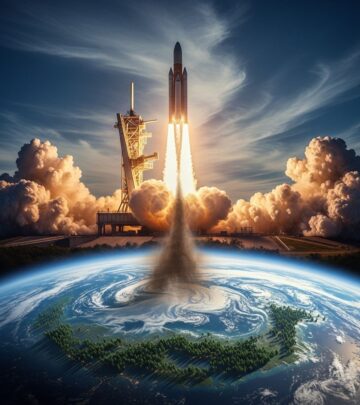
The space industry has captured humanity’s imagination for decades, promising technological advancement, scientific discovery, and the potential for interplanetary exploration. However, as rocket launches become increasingly frequent and commercial spaceflight expands, critical questions emerge about the environmental cost of our cosmic ambitions. The carbon footprint of space programs represents a complex and growing concern that demands careful examination as we balance our aspirations for space exploration with planetary responsibility.
While space agencies like NASA have developed sophisticated tools to monitor Earth’s carbon emissions from orbit, the irony isn’t lost that the very rockets carrying these instruments contribute to atmospheric pollution. Understanding the full environmental impact of space programs requires examining multiple factors, from the direct emissions of rocket launches to the broader ecological implications of an expanding space industry.
Understanding Rocket Emissions and Their Composition
Rocket propulsion systems generate substantial emissions that differ significantly from traditional transportation sources. The combustion process required to achieve escape velocity releases a complex mixture of gases and particulate matter into multiple layers of the atmosphere. Unlike aircraft emissions that remain primarily in the lower atmosphere, rockets deposit pollutants across various atmospheric zones, creating unique environmental challenges.
The chemical composition of rocket exhaust varies depending on the propellant used. Traditional liquid-fueled rockets burning kerosene and liquid oxygen produce carbon dioxide, water vapor, and various nitrogen compounds. Solid-fueled rockets, often used as boosters, emit aluminum oxide particles, chlorine gas, and other compounds that pose specific environmental risks. The newer generation of rockets using liquid hydrogen and oxygen produces primarily water vapor, which initially appears cleaner but still carries atmospheric implications.
Each rocket launch injects these emissions directly into the stratosphere and upper atmosphere, where they can persist for extended periods. The concentrated nature of these emissions, combined with their high-altitude deposition, creates disproportionate environmental effects compared to the relatively small volume of material released.
Black Carbon: The Hidden Climate Threat
Among the various pollutants released by rockets, black carbon—commonly known as soot—represents one of the most significant climate concerns. As of 2022, estimates indicate that rockets emit approximately 1,000 tons of black carbon into the atmosphere annually. While this figure might seem modest compared to other industrial sources, the unique characteristics of rocket-generated black carbon make it exceptionally problematic for climate stability.
Research has demonstrated that black carbon particles from rockets possess dramatically enhanced warming potential compared to soot from terrestrial sources. Studies reveal these particles are nearly five hundred times more efficient at warming the atmosphere than all other sources of soot combined. This extraordinary potency stems from their deposition altitude and their interaction with stratospheric dynamics.
When hydrocarbon rockets combust fuel, they release substantial quantities of soot directly into the upper atmosphere. These black carbon emissions accumulate in the stratosphere, forming distinct layers according to particle size and composition. Though invisible to the naked eye, these layers absorb and scatter sunlight before it reaches Earth’s surface, causing complex climate forcing effects that scientists are still working to fully understand.
A NOAA-led study published in recent years modeled the potential climate impact from black carbon emissions at various projected levels. The researchers examined scenarios where the current 1,000 tons of annual black carbon emissions increased by an order of magnitude—a likely outcome over the next two decades based on industry growth targets. Their findings revealed that the atmosphere exhibits significant sensitivity to these increases in black carbon, leading to elevated stratospheric temperatures and disruption of the ozone layer.
Stratospheric Pollution and Ozone Depletion
As rockets ascend into orbit, they leave behind a trail of material containing both gases and particulate matter. The stratosphere, home to Earth’s protective ozone layer, faces particular vulnerability to rocket emissions. Two primary environmental concerns dominate discussions about stratospheric pollution from spaceflight: chlorine gas emitted by solid-fueled rockets and various particle emissions including black carbon and alumina.
Chlorine’s role in ozone destruction is well-established from decades of research on chlorofluorocarbons. When solid-fueled rockets release chlorine gas directly into the stratosphere, they inject this ozone-depleting substance precisely where it can cause maximum damage. Chlorine emissions at stratospheric altitudes prove far more potent than emissions released lower in the troposphere, as the chemical reactions that break down ozone molecules occur most efficiently in the stratosphere’s unique conditions.
Particle emissions present a more enigmatic challenge. While scientists recognize that black carbon specifically carries climate impact, the full extent of that impact and the effects of other particulate emissions from spaceflight remain areas requiring extensive additional research. These particles don’t simply dissipate; they accumulate in stratospheric layers, creating long-term atmospheric alterations whose consequences unfold over years and decades.
The Scale of Space Industry Growth
The space industry stands at an inflection point, with launch frequencies projected to increase dramatically in coming years. Commercial spaceflight companies have announced ambitious plans for satellite mega-constellations, space tourism ventures, and regular cargo missions. Each of these initiatives requires multiple rocket launches, multiplying the environmental footprint of space activities.
Current projections suggest that annual rocket launches could increase by an order of magnitude or more within the next two decades. This exponential growth raises urgent questions about cumulative environmental impacts. If black carbon emissions alone increase proportionally with launch frequency, the atmospheric consequences could prove severe. Research modeling these scenarios indicates that even modest increases in emissions could trigger measurable changes in stratospheric temperature profiles and ozone chemistry.
The democratization of space access, while technologically impressive and economically transformative, carries environmental costs that haven’t been fully accounted for in policy frameworks. As more nations and private entities develop launch capabilities, the collective impact on Earth’s atmosphere intensifies, potentially outpacing our understanding of the consequences.
Comparing Propellant Types and Their Environmental Impacts
Not all rocket propellants create equal environmental impacts. The choice of propellant fundamentally determines the type and quantity of emissions produced during launch. Understanding these differences proves essential for developing more sustainable spaceflight approaches.
Solid Propellants: Solid rocket boosters, widely used for their reliability and simplicity, burn a mixture containing aluminum powder and ammonium perchlorate. This combustion produces aluminum oxide particles and chlorine compounds that pose significant environmental risks, particularly regarding ozone depletion. The convenience and performance characteristics of solid boosters must be weighed against their substantial atmospheric impact.
Liquid Hydrocarbons: Rockets burning kerosene-based fuels like RP-1 produce carbon dioxide, water vapor, and black carbon. While carbon dioxide emissions from individual launches remain relatively small compared to global totals, the black carbon represents a disproportionate climate forcing agent due to its stratospheric deposition and enhanced warming potential.
Liquid Hydrogen: Hydrogen-fueled rockets emit primarily water vapor, initially appearing as the cleanest option. However, water vapor released directly into the stratosphere can itself act as a greenhouse gas and potentially affect high-altitude cloud formation. The production of liquid hydrogen also requires substantial energy input, creating indirect carbon emissions that must be considered in full lifecycle assessments.
NASA’s Role in Monitoring Global Carbon Emissions
Ironically, while contributing to atmospheric emissions, NASA has pioneered revolutionary technologies for monitoring carbon dioxide from space. The agency’s Orbiting Carbon Observatory missions, OCO-2 and OCO-3, have transformed our ability to track greenhouse gas emissions globally.
These sophisticated satellites make approximately 100,000 measurements of atmospheric carbon dioxide over the globe daily. Using light-analyzing spectrometers, the spacecraft detect CO2’s unique signature hundreds of miles below them, mapping carbon footprints from both natural and anthropogenic sources across various scales from individual facilities to entire continents.
A groundbreaking study demonstrated that OCO missions could detect and track changes in CO2 emissions from single facilities, monitoring Europe’s largest coal-fired power plant in Poland between 2017 and 2022. Researchers discovered that changes in CO2 levels correlated consistently with variations in electricity generation, and the satellites successfully detected emission reductions during plant shutdowns.
This space-based monitoring capability has extended to tracking emissions for more than 100 countries worldwide. A pilot project involving over 60 researchers used OCO-2 measurements combined with surface-based observations to quantify increases and decreases in atmospheric carbon dioxide concentrations from 2015 to 2020, providing unprecedented insights into national carbon balances.
Urban Carbon Footprints Revealed From Space
NASA’s satellite observations have yielded fascinating insights into urban carbon emissions patterns. Research examining 20 major cities worldwide found that population density significantly influences per capita carbon dioxide emissions. Generally, as a city’s population density increases, its carbon dioxide emissions per person decline, though notable exceptions exist.
This research demonstrates how satellite-based carbon monitoring can provide fast-growing cities with powerful tools to track emissions and assess the impact of policy changes and infrastructure improvements on energy efficiency. Cities account for more than 70% of global carbon dioxide emissions associated with energy production, making urban carbon management critical for climate mitigation efforts.
The Paradox of Space-Based Climate Solutions
The space industry presents a fundamental paradox: the technologies launched to monitor and understand climate change themselves contribute to atmospheric pollution and climate forcing. This tension between means and ends raises philosophical and practical questions about how we pursue environmental knowledge and protection.
Space-based carbon observations hold enormous promise for future efforts to monitor emissions and provide information that can help reduce CO2 output globally. These monitoring systems play key roles in supporting carbon emission reductions necessary to mitigate climate change and achieve goals established in the Paris Agreement. However, expanding this monitoring infrastructure requires additional launches, creating a feedback loop where solving the climate crisis potentially exacerbates it.
The emerging Monitoring Verification and Support systems based on satellite observations offer capabilities impossible to achieve through ground-based methods alone. The ability to track emissions at appropriate temporal and spatial scales proves critical for enforcing climate agreements and guiding policy decisions. Yet each satellite deployed requires rocket emissions that contribute to the very problem being monitored.
Measuring the Total Carbon Footprint of Space Programs
Calculating the complete carbon footprint of space programs requires examining multiple factors beyond direct launch emissions. The full lifecycle assessment must include manufacturing processes for rockets and satellites, ground operations at launch facilities, mission control operations, and the extensive supply chains supporting space activities.
Rocket manufacturing involves energy-intensive processes including metal fabrication, composite material production, and precision electronics assembly. These industrial activities generate substantial carbon emissions before any rocket ever leaves the ground. Launch facilities require constant power for vehicle assembly buildings, propellant production and storage, tracking systems, and communications infrastructure.
Propellant production represents another significant carbon source, particularly for liquid hydrogen which requires energy-intensive electrolysis or reforming processes. The transportation of rocket components and propellants to launch sites adds additional emissions to the total footprint.
Future Trajectories and Mitigation Strategies
As the space industry continues expanding, developing strategies to minimize environmental impact becomes increasingly urgent. Several approaches show promise for reducing the carbon footprint of space activities, though each presents implementation challenges.
Propellant Innovation: Transitioning toward cleaner propellants, particularly liquid hydrogen and oxygen combinations, could significantly reduce black carbon emissions. However, this requires addressing the carbon intensity of hydrogen production through renewable energy sources. Developing entirely new propulsion technologies, such as electric propulsion for orbital maneuvering, could eliminate some emission sources entirely.
Launch Frequency Optimization: Consolidating payloads to reduce the number of required launches could decrease cumulative emissions. Satellite servicing and refueling missions might extend spacecraft operational lifetimes, reducing replacement frequency and associated launch requirements.
Carbon Offset Programs: Space agencies and commercial launch providers could implement comprehensive carbon offset programs, investing in reforestation, renewable energy, or carbon capture technologies to compensate for unavoidable emissions. However, such programs face criticism regarding their effectiveness and whether they truly address the unique atmospheric impacts of stratospheric emissions.
Regulatory Frameworks: Developing international agreements that account for space industry emissions in national carbon budgets could create incentives for cleaner launch technologies. Currently, rocket emissions often fall into regulatory gaps, neither adequately tracked nor constrained by existing climate policies.
The Ethical Dimensions of Space Exploration
The environmental impact of space programs raises profound ethical questions about humanity’s priorities and responsibilities. Space exploration offers genuine benefits including scientific knowledge, technological advancement, Earth observation capabilities for climate monitoring, and potentially crucial resources for long-term human survival. However, pursuing these benefits while contributing to environmental degradation creates moral tensions that society must address.
The argument for space exploration often invokes humanity’s innate curiosity and the potential for discovering solutions to terrestrial challenges through space-based research. Supporters contend that the knowledge gained from space activities, particularly regarding Earth’s climate systems, justifies the environmental costs. The satellite data tracking global carbon emissions, monitoring deforestation, and observing ice sheet dynamics provides invaluable information for addressing climate change.
Critics counter that devoting resources to space exploration while the planet faces existential environmental threats represents misplaced priorities. They argue that the carbon budget remaining to avoid catastrophic climate change is finite, and allocating any portion of it to non-essential space activities is indefensible. The luxury of space tourism particularly draws criticism as an indefensible environmental indulgence.
Comparing Space Emissions to Other Sources
Contextualizing space program emissions within the broader landscape of human carbon output provides important perspective. The entire space industry’s current annual emissions represent a tiny fraction of global totals—less than what occurs from a few hours of worldwide aviation or a single large coal power plant’s annual output.
However, this comparison obscures critical differences. The unique atmospheric deposition patterns of rocket emissions create disproportionate impacts per unit of material released. The stratospheric concentration of pollutants and the exceptional warming potential of space-generated black carbon mean that simple tonnage comparisons understate the climate relevance of space emissions.
Furthermore, while many emission sources are declining or stabilizing due to efficiency improvements and renewable energy adoption, space industry emissions are projected to grow exponentially. What currently represents a negligible contributor could become climatically significant as launch frequencies increase by orders of magnitude.
The Path Forward: Balancing Exploration and Preservation
Reconciling space exploration ambitions with environmental responsibility requires honest assessment of both costs and benefits. Abandoning space activities entirely seems neither realistic nor desirable given their scientific value and the practical benefits of Earth observation. However, unconstrained growth without regard for environmental consequences is equally untenable.
The space industry must embrace environmental stewardship as a core value, investing in research to understand and mitigate its atmospheric impacts. This includes supporting independent scientific studies of rocket emissions, developing cleaner propulsion technologies, and implementing comprehensive emissions tracking and reporting systems.
Prioritizing missions with clear Earth benefits—climate monitoring satellites, communications infrastructure for underserved regions, scientific research with practical applications—over luxury activities like space tourism could help justify the environmental costs. Establishing clear criteria for which space activities warrant their carbon footprint encourages more thoughtful and intentional use of launch capabilities.
International cooperation will prove essential for managing the space industry’s environmental impact. Space activities transcend national boundaries, and their atmospheric effects are global in scope. Developing treaties and frameworks that address space emissions while preserving access to space for scientific and practical purposes represents a complex diplomatic challenge that the international community must undertake.
Frequently Asked Questions
Q: How much carbon dioxide does a single rocket launch emit?
A: A single rocket launch can emit between 200 to 300 tons of carbon dioxide depending on the rocket type and propellant used. However, the black carbon and other particulates released have climate impacts far exceeding their mass, with rocket-generated soot being nearly 500 times more efficient at atmospheric warming than other soot sources.
Q: Are some rocket fuels cleaner than others?
A: Yes, liquid hydrogen and oxygen propellants produce primarily water vapor, making them cleaner than kerosene-based or solid propellants that emit black carbon and chlorine compounds. However, producing liquid hydrogen requires significant energy, and even water vapor released into the stratosphere can have climate effects.
Q: How does the space industry’s carbon footprint compare to aviation?
A: Currently, the entire space industry’s annual emissions are far smaller than aviation’s. However, rocket emissions are deposited in the stratosphere where they have disproportionate climate impacts. As launch frequencies increase dramatically in coming decades, this comparison may shift significantly.
Q: Can rocket emissions damage the ozone layer?
A: Yes, particularly emissions from solid-fueled rockets that release chlorine gas directly into the stratosphere where the ozone layer resides. Research indicates that increasing launch frequencies could contribute to ozone depletion, though the full extent requires further study.
Q: Is space tourism environmentally justifiable?
A: This remains highly debated. Critics argue that space tourism represents an indefensible luxury given its carbon footprint and the climate crisis, while supporters contend it could drive technological innovations that make spaceflight more sustainable. The environmental cost per passenger for space tourism far exceeds any other form of travel.
Q: What is NASA doing to monitor Earth’s carbon emissions?
A: NASA operates sophisticated satellites like OCO-2 and OCO-3 that measure atmospheric carbon dioxide globally, making approximately 100,000 daily observations. These missions can track emissions from individual facilities and have monitored carbon levels for over 100 countries, providing crucial data for climate research and policy.
References
- https://carboncredits.com/nasa-space-based-observations-track-carbon-at-the-source/
- https://scitechdaily.com/nasa-space-mission-reveals-carbon-dioxide-emissions-for-countries-around-the-world/
- https://payloadspace.com/the-space-industrys-climate-impact-part-2/
- https://clasp.engin.umich.edu/2020/03/03/nasa-satellite-offers-urban-carbon-dioxide-insights/
- https://science.nasa.gov/earth/explore/earth-indicators/carbon-dioxide/
- https://www.earthdata.nasa.gov/topics/human-dimensions/industrial-emissions
- https://carbon.nasa.gov/missions.html
- https://science.nasa.gov/earth/watch-carbon-dioxide-move-through-earths-atmosphere/
- https://earthobservatory.nasa.gov/images/152519/emissions-from-fossil-fuels-continue-to-rise
Similar Articles








Read full bio of Sneha Tete


