
Savage X Fenty: Inclusivity Promise vs. Ethical Reality
Behind Rihanna's revolutionary lingerie brand lies a troubling ethical scorecard
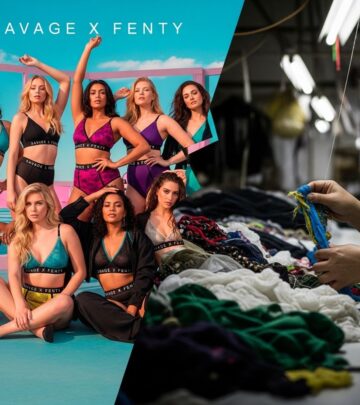
When Rihanna launched Savage X Fenty in 2018, the lingerie world experienced a seismic shift. The brand promised something the industry desperately needed: genuine inclusivity that celebrated bodies of all shapes, sizes, and backgrounds. With revolutionary fashion shows featuring diverse models, pregnant women strutting confidently, and designs that ranged from XS to 3X, Savage X Fenty quickly became the antithesis of Victoria’s Secret’s exclusive Angel aesthetic. The brand’s message resonated powerfully with consumers tired of feeling excluded from conventional beauty standards.
However, beneath the empowering marketing campaigns and body-positive messaging lies a troubling reality that challenges everything the brand claims to represent. Recent ethical accountability reports have revealed that Savage X Fenty’s commitment to inclusivity doesn’t extend to the workers producing these garments or the environmental impact of its operations. The dissonance between the brand’s progressive public image and its actual business practices raises critical questions about what true inclusivity means in the fashion industry.
The Revolutionary Promise of Savage X Fenty
Savage X Fenty burst onto the scene as more than just another celebrity-backed fashion venture. Rihanna, already a billionaire entrepreneur with successful ventures in beauty through Fenty Beauty, identified a massive gap in the lingerie market. Traditional brands had long perpetuated narrow beauty standards, leaving countless women feeling invisible and underserved. Savage X Fenty positioned itself as the solution to this problem, championing fearlessness, confidence, and genuine representation.
The brand’s annual fashion shows became cultural events that redefined sexy. Unlike traditional runway presentations, these spectacles featured models of different ages, gender identities, abilities, sizes, and ethnic backgrounds. Pregnant models walked alongside cisgender and transgender performers, while dancers of various body types showcased the versatility of the designs. Celebrities like Taraji P. Henson, Cindy Crawford, and Gottmik lent their star power to these productions, which were praised for making everyone feel seen and celebrated.
Rihanna articulated her vision clearly in an interview with Elle magazine: “I wanted to include every woman. I wanted every woman on the stage with different energies, different races, body types, different stages in their womanhood, culture.” This statement captured the brand’s ethos and resonated deeply with consumers who had felt marginalized by the fashion industry for decades. The financial success followed swiftly—Savage X Fenty generated an estimated $150 million in revenue in 2020, and by 2021, the brand was valued at $1 billion, eventually reaching a staggering $3 billion valuation.
The Shocking Ethical Scorecard
In November 2022, the nonprofit organization Remake released its Fashion Accountability Report, which evaluates companies based on their actions toward social and environmental justice goals. The results for Savage X Fenty were devastating: the brand scored a dismal 4 out of 150 possible points. To put this in perspective, the average score among the 58 companies evaluated was 14 points, and shockingly, Savage X Fenty scored even worse than Shein, a brand widely criticized for its unethical practices.
The report assessed companies across multiple categories including Traceability, Wages and Wellbeing, Commercial Practices, Raw Materials, Environmental Justice, and Governance. Savage X Fenty demonstrated what the report called “an utter lack of transparency and accountability” across virtually all these areas. The brand provided minimal information about its supply chain, with its website merely noting that products are “imported” without any meaningful disclosure about manufacturing locations, working conditions, or environmental practices.
Charlotte Kincaid, a self-described “sustainable fashion obsessive and raging Rihanna superfan” who authored Remake’s analysis, expressed her shock at these findings. The report warned that with its “continued linear growth trajectory and lack of supply chain transparency, Savage X Fenty may be well on its way to joining the industry’s worst violators of both human rights and planetary boundaries.” This assessment placed a brand celebrated for progressive values in the same category as some of fashion’s most notorious offenders.
Understanding the Scope of the Problem
The ethical issues plaguing Savage X Fenty extend far beyond a simple low score on a report card. The brand’s approach to business fundamentally contradicts the values it markets to consumers. While the company celebrates diversity on the runway, it remains silent about the diversity of workers in its supply chain and whether they receive fair wages or work in safe conditions. This gap between public messaging and private practices represents a form of ethical greenwashing that exploits consumers’ desire to support progressive brands.
Supply chain transparency has become an industry standard expectation, with many fashion companies publishing detailed reports about their manufacturing facilities, labor practices, and environmental initiatives. Savage X Fenty’s refusal to provide this basic information suggests either a lack of oversight or, more troublingly, conditions the company prefers to keep hidden. The brand operates through a joint venture with TechStyle Fashion Group, which also manages other subscription-based fashion brands, raising questions about whether rapid growth and profit margins are prioritized over ethical considerations.
The environmental impact of the brand’s operations remains similarly opaque. Fast fashion’s environmental toll is well-documented, from excessive water consumption and chemical pollution to textile waste that clogs landfills and microplastic contamination of waterways. Without transparency about raw materials sourcing, production methods, or waste management practices, consumers have no way to assess Savage X Fenty’s environmental footprint or hold the company accountable for improvement.
Legal Troubles and Consumer Protection Issues
Beyond environmental and labor concerns, Savage X Fenty faced significant legal challenges in 2022 related to its VIP membership program. Multiple California district attorneys’ offices and the Santa Monica City Attorney filed a lawsuit alleging misleading business practices. The accusations centered on the brand’s failure to clearly disclose automatic charges associated with VIP memberships, improperly obtaining customer consent for recurring payments, and falsely advertising the use of store credit.
These allegations revealed a pattern of prioritizing revenue generation over transparent communication with customers. Many consumers reported being unknowingly enrolled in the VIP membership program, which charged $49.95 monthly, after making purchases on the website. The automatic enrollment process and recurring charges were allegedly not sufficiently disclosed, leading to unexpected bills and frustrated customers who felt deceived by a brand they wanted to support.
The lawsuit resulted in a $1.2 million settlement, with Savage X Fenty agreeing to pay $1 million in civil penalties, $150,000 in restitution to affected California VIP members, and $50,000 in investigative costs. While the company cooperated with authorities and implemented changes to its website, advertising practices, and automatic renewal notices, the incident raised questions about the brand’s corporate culture and commitment to customer welfare. How could a company that positioned itself as empowering and inclusive engage in practices that many consumers experienced as predatory?
The Broader Fast Fashion Context
Savage X Fenty’s ethical shortcomings must be understood within the broader context of fast fashion’s impact on workers and the environment. The fast fashion model relies on rapid production cycles, low prices, and constant newness to drive consumer purchases. This business model inherently creates pressure throughout the supply chain, often resulting in poor working conditions, inadequate wages, and environmental degradation.
What makes Savage X Fenty’s case particularly problematic is the disconnect between its brand identity and its business practices. Many fast fashion companies make no claims about ethics or inclusivity; they compete primarily on price and trend responsiveness. Savage X Fenty, however, built its reputation on progressive values and authentic representation. When a brand explicitly markets itself as different from traditional fashion companies, the failure to live up to those claims feels like a more significant betrayal of consumer trust.
The comparison to Shein is especially damning. Shein has become synonymous with ultra-fast fashion’s worst excesses, facing widespread criticism for labor exploitation, environmental damage, and design theft. For Savage X Fenty to score lower than Shein in ethical practices suggests systemic problems that cannot be dismissed as mere oversights or growing pains. It indicates a fundamental misalignment between the company’s values as expressed in marketing and its actual operational priorities.
Rihanna’s Role and Responsibilities
As the founder and public face of Savage X Fenty, Rihanna bears significant responsibility for the brand’s ethical performance. Her personal brand is built on authenticity, boundary-breaking, and standing up for marginalized communities. Fenty Beauty, her cosmetics line, was widely praised not just for its inclusive shade range but also for changing industry standards and forcing competitors to improve their own diversity. This track record makes Savage X Fenty’s ethical failures more surprising and disappointing.
In June 2023, Rihanna stepped down as CEO of Savage X Fenty, though she remained as executive chair. Hillary Super, formerly of Anthropologie Group with experience at Guess, American Eagle, Gap, and Old Navy, took over as CEO. While this leadership transition could potentially bring new perspectives and priorities to the company, it also raises questions about whether ethical concerns played any role in Rihanna’s decision to step back from daily operations.
The timing of this change, coming after the damaging accountability report and legal settlement, suggests possible recognition that the brand needed professional management with retail expertise. However, without explicit acknowledgment of the ethical issues and concrete commitments to improvement, the leadership change alone provides little assurance that Savage X Fenty will meaningfully address its problems.
Consumer Responsibility and Informed Choices
The Savage X Fenty situation highlights the challenges consumers face in making ethical purchasing decisions. Many people who bought from the brand believed they were supporting a company that aligned with their values around diversity and representation. The revelation that the brand scores worse than Shein in ethical practices forces a reckoning with the difference between marketing messages and operational realities.
This disconnect isn’t unique to Savage X Fenty. The fashion industry is rife with examples of brands that market sustainability or ethics while maintaining problematic practices behind the scenes. Greenwashing and ethics-washing have become sophisticated marketing strategies that exploit consumer desire to shop consciously without requiring companies to make substantial changes. Breaking through this noise requires consumer education, independent reporting, and accountability mechanisms like the Remake report.
Consumers who want to make more informed choices need to look beyond brand messaging and seek out independent assessments from organizations like Remake, Good On You, and Fashion Revolution. These groups evaluate brands based on transparent criteria and provide comparative data that helps consumers understand where companies actually stand on ethical issues. While no brand is perfect, there are significant differences between companies making genuine efforts toward improvement and those engaging in pure marketing spin.
What True Inclusivity Really Means
The Savage X Fenty controversy ultimately raises fundamental questions about what inclusivity means in fashion and business more broadly. Is it enough to feature diverse models and offer extended sizing while potentially exploiting workers in the supply chain? Can a brand claim to empower women when it may be profiting from poor working conditions that disproportionately affect women in manufacturing countries?
Genuine inclusivity must extend beyond marketing and product design to encompass every aspect of a company’s operations. This means fair wages and safe working conditions for all workers in the supply chain, environmental practices that don’t disproportionately harm vulnerable communities, transparent business practices that respect consumer autonomy, and accountability mechanisms that allow for independent verification of claims. Without these elements, inclusivity becomes merely a marketing tool rather than a guiding principle.
The fashion industry has long been criticized for its exploitation of workers, particularly women of color in developing countries who make up the majority of garment workers worldwide. For a brand founded by a Black woman and marketed as celebrating diversity to potentially contribute to this exploitation represents a profound irony. True inclusivity would mean ensuring that the workers who make Savage X Fenty products experience the same respect and empowerment that the brand promises to its customers.
The Path Forward
Savage X Fenty’s ethical challenges are not insurmountable, but addressing them will require substantial commitment and structural changes. The brand needs to implement comprehensive supply chain mapping and transparency, publish detailed reports about manufacturing locations and labor conditions, establish and enforce strong supplier codes of conduct, invest in fair wages and worker wellbeing programs, develop and disclose environmental sustainability initiatives, and submit to independent third-party auditing and verification.
These steps would align the company’s operations with its marketing messages and rebuild trust with consumers who feel betrayed by the revelations about ethical practices. The brand’s $3 billion valuation and significant financial resources mean it has the capacity to make these investments if leadership prioritizes ethics alongside profitability.
The fashion industry is at a crossroads, with increasing consumer awareness and demand for ethical practices pushing companies toward greater accountability. Brands that fail to adapt risk not only reputational damage but also potential regulatory action as governments increasingly scrutinize supply chain practices and environmental impacts. For Savage X Fenty, the choice is between making superficial changes that maintain appearances while continuing business as usual or embracing genuine transformation that makes its operations as inclusive and progressive as its marketing claims.
Frequently Asked Questions
Q: How did Savage X Fenty score in ethical accountability compared to other brands?
A: Savage X Fenty scored only 4 out of 150 possible points in Remake’s 2022 Fashion Accountability Report, which was worse than Shein and significantly below the industry average of 14 points among the 58 brands evaluated.
Q: What were the main ethical concerns identified about Savage X Fenty?
A: The brand demonstrated a lack of transparency and accountability across multiple categories including supply chain traceability, wages and worker wellbeing, commercial practices, raw materials sourcing, environmental justice, and governance. The company provided minimal information about where and how its products are manufactured.
Q: What legal issues has Savage X Fenty faced?
A: In 2022, Savage X Fenty faced a lawsuit from California authorities over its VIP membership program, accused of not clearly disclosing automatic charges, improperly obtaining consent for recurring payments, and falsely advertising store credit use. The case resulted in a $1.2 million settlement.
Q: Is Rihanna still the CEO of Savage X Fenty?
A: No, Rihanna stepped down as CEO in June 2023, though she remained as executive chair. Hillary Super, formerly of Anthropologie Group, took over as CEO, bringing extensive retail industry experience to the leadership role.
Q: What changes has Savage X Fenty made in response to these criticisms?
A: Following the legal settlement, Savage X Fenty implemented changes to its website, advertising practices, and automatic renewal notices. However, comprehensive responses to the broader ethical concerns identified in the Remake report have not been publicly detailed by the company.
Q: How can consumers make more ethical lingerie choices?
A: Consumers can research brands using independent accountability reports from organizations like Remake, Good On You, and Fashion Revolution. Look for brands that publish detailed information about their supply chains, labor practices, and environmental initiatives, and consider supporting smaller companies with transparent ethical commitments.
References
- https://www.eviemagazine.com/post/rihannas-savage-x-fenty-ranked-worse-sheins-ethical-practices-score
- https://en.wikipedia.org/wiki/Savage_X_Fenty
- https://www.greenmatters.com/style/is-rihanna-savage-x-fenty-ethical
- https://www.culturebanx.com/cbx-daily/savage-x-fenty-redefining-fashion-while-facing-ethical-scrutiny/
- https://remake.world/stories/rihanna-savage-x-fenty-scores-worse-than-shein-in-accountability/
- https://www.latimes.com/entertainment-arts/story/2023-06-24/rihanna-stepping-down-ceo-lingerie-brand-savage-x-fenty
Similar Articles





Read full bio of Sneha Tete


